
From Seed to Ash: The Journey of the Cigar
There is a long journey between human knowledge and natural wealth before a cigar is lit.
Area Selection and Soil Preparation
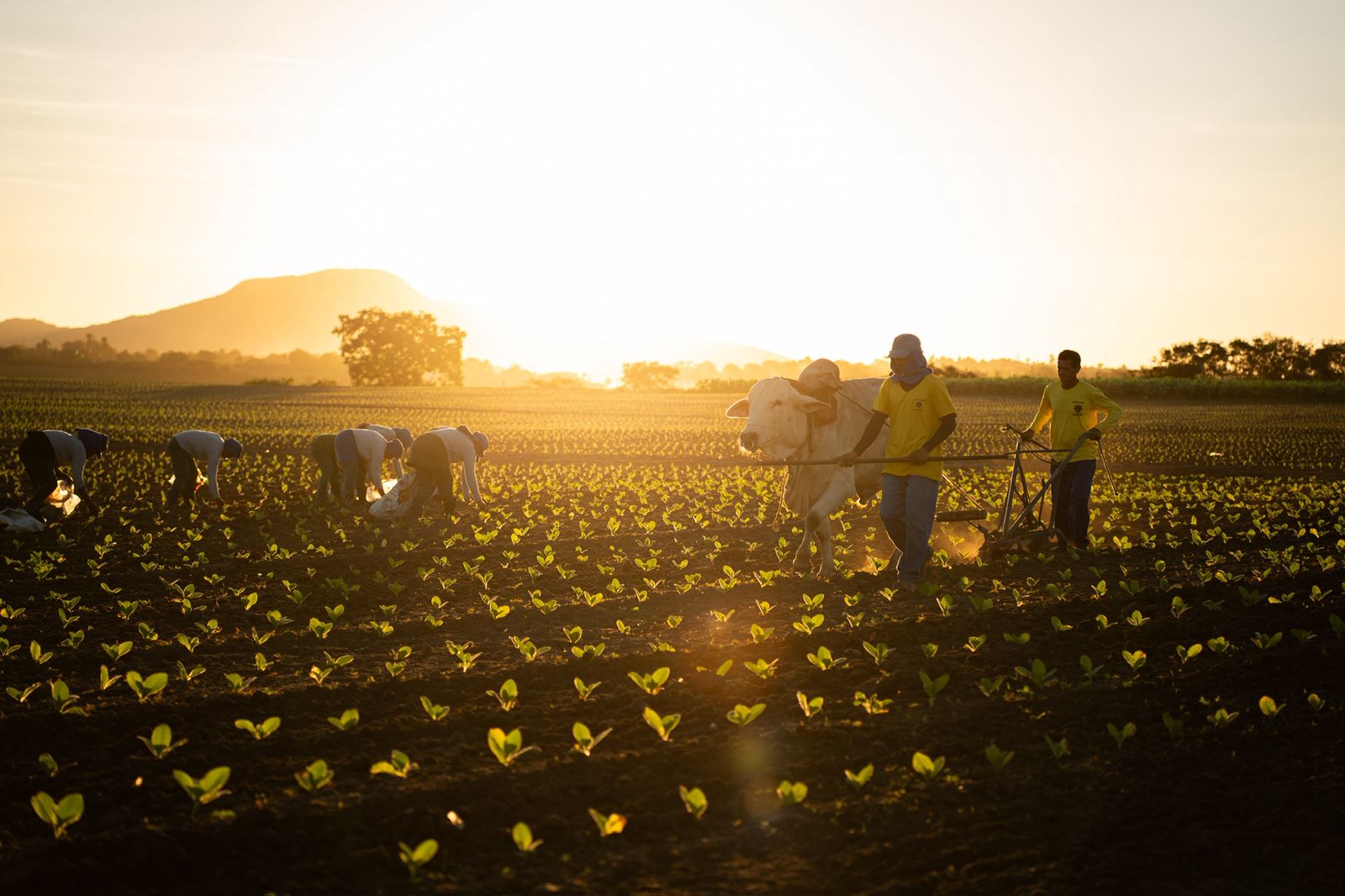
We require a flat area, or one with as little elevation as possible, with sandy-clay soil (a blend of sand and clay). We research the area’s history to check for phytosanitary problems and whether herbicides from other crops, such as those used on pastures, were ever applied.
The chosen area was the Recôncavo Baiano, because it holds the proper terroir for growing Brasil/Bahia tobacco. The soil must be loosened through mechanized preparation with plows, drag harrows, or hydraulic harrows. This preparation encourages better rooting, allowing greater nutrient absorption.
Sowing and Germination
We select the best seeds using a process we call sieving of the bare seed, mixing them with a material that adds volume and weight to the tiny grain, in order to minimize losses.
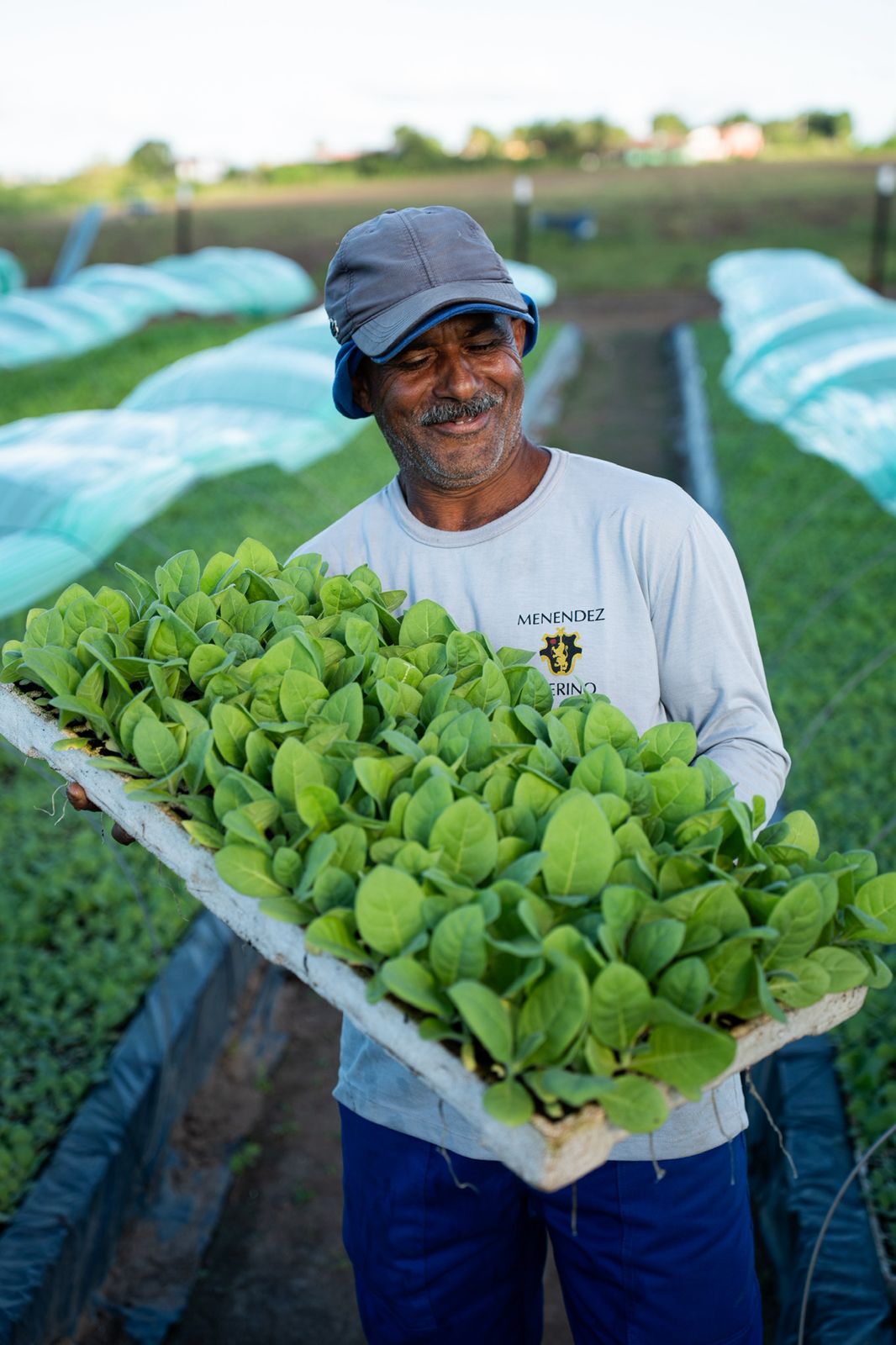
The seeds are then sown in a specific substrate, applied in pinches onto a tray divided into cells. As the seeds germinate and the seedlings emerge, we carry out the selection through a pricking out process, which consists of keeping one seedling per cell in the tray.
Planting, Fertilization, and Replanting
We mark out the areas with the appropriate spacing. We select the best seedlings and plant them one by one, by hand.
We use specific fertilization for each type of seed, applying both organic and inorganic fertilizers. Plants that keep their inflorescence require more nutrients than those that are topped. Replanting is necessary when some seedlings fall below the desired standard.
Care and Maintenance
One of our care practices is removing the lower leaves, which improves the quality standard of the plant. We build ridges (leiras) to favor the plant’s development, improving root formation and protecting it against invasive plants.
Next, we prune the flowers to optimize the plant’s development. This measure ensures that all necessary nutrients benefit the leaves preferentially.
Harvesting and Drying
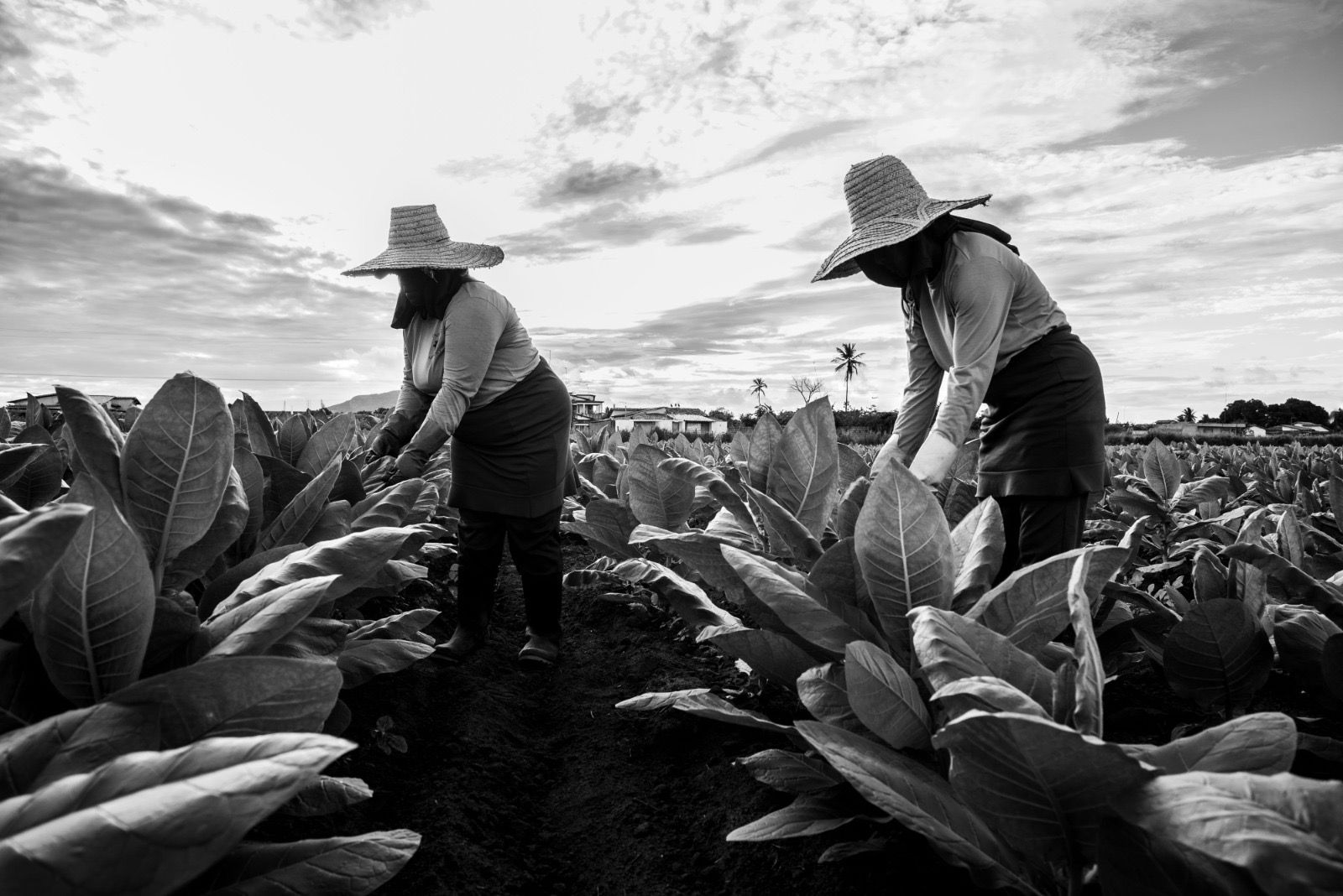
The ideal point for harvesting is when the leaves change from green to pale green. When the leaves reach the ideal stage of maturity, harvesting begins, picking the leaves two at a time, from bottom to top.
The topping height defines the yield, that is, the number of leaves harvested from each plant. The harvested leaves are strung on a type of thread, marked with ribbons, and placed at the top of the drying shed to remove moisture through ventilation and heating, controlling the temperature until the desired point is reached.
Processing and Fermentation
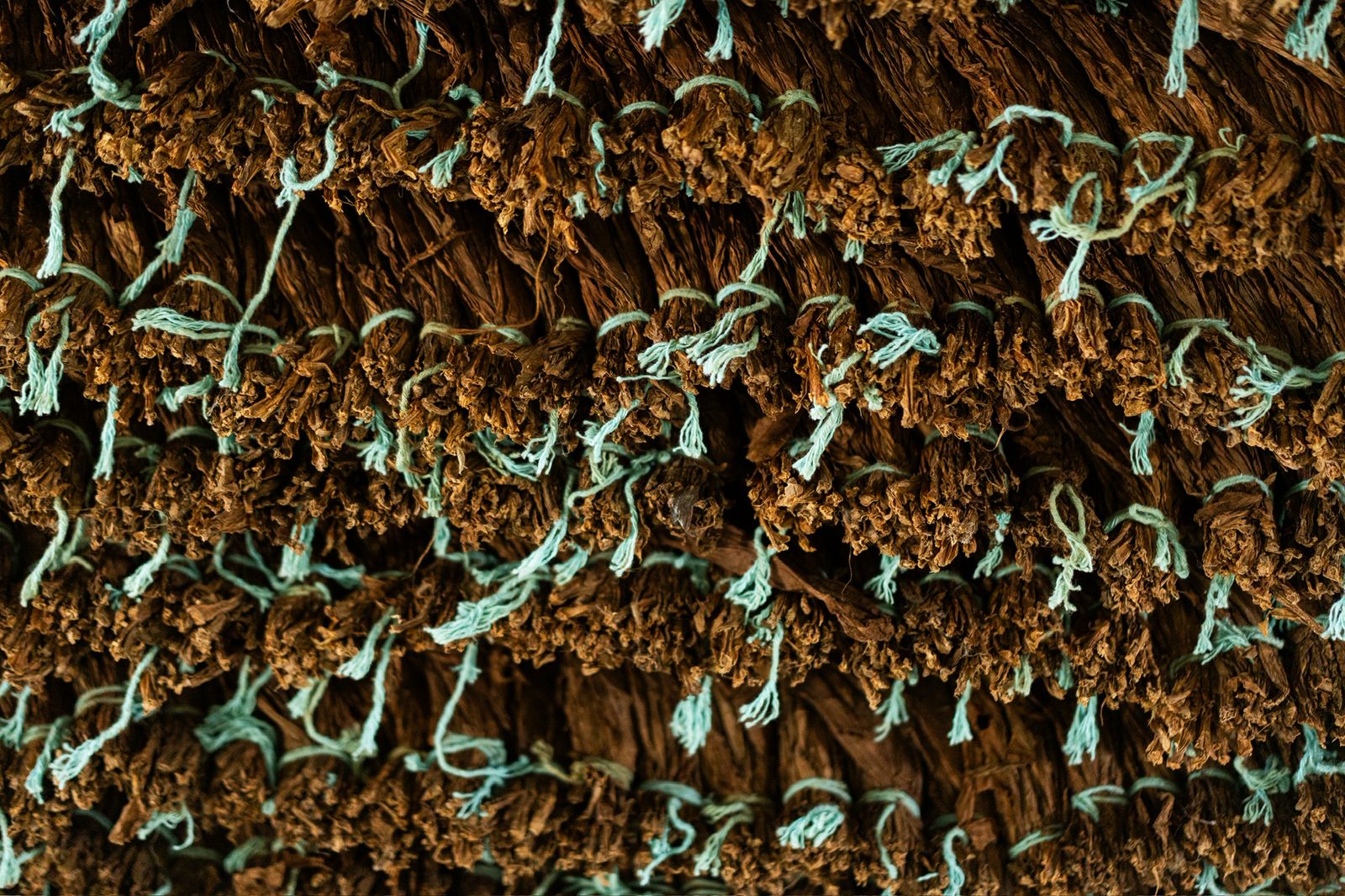
Wrappers: After drying, the leaves are organized into transport boxes and sent to the factory.
Filler tobacco: The leaves are packed into Calhamaço sacks and transported to the factory, where we classify the tobacco to assess whether it meets our quality standard. We verify the weight, and then the tobacco is sent for the construction of the piles.
Aerobic pile formation: The piles are built with the length, width, and height that suit our standard, to ease handling during the turnings, seeking a better result in the fermentation process.
Turning the piles: This process consists of relocating the pile from one base to another, moving leaves from the center to the edges and from the edges to the center, while those at the bottom go to the top and those at the top go to the bottom. We repeat the process as many times as necessary to reach the ideal point, observing temperature and humidity and recording the temperature daily. Our peak temperature standard is 50 degrees; it starts high and gradually decreases in intensity during the process, while we manage oxygenation. Turning the piles promotes the burning of the cerol, the release of ammonia, and color uniformity, seeking the ideal fermentation.
Anaerobic formation: We repeat the previous process; instead of by handfuls, the leaves are now laid open after being moistened. The wrappers are classified according to color and size, then dried and baled. The filler classification is incorporated into the destala.
Cigar Construction
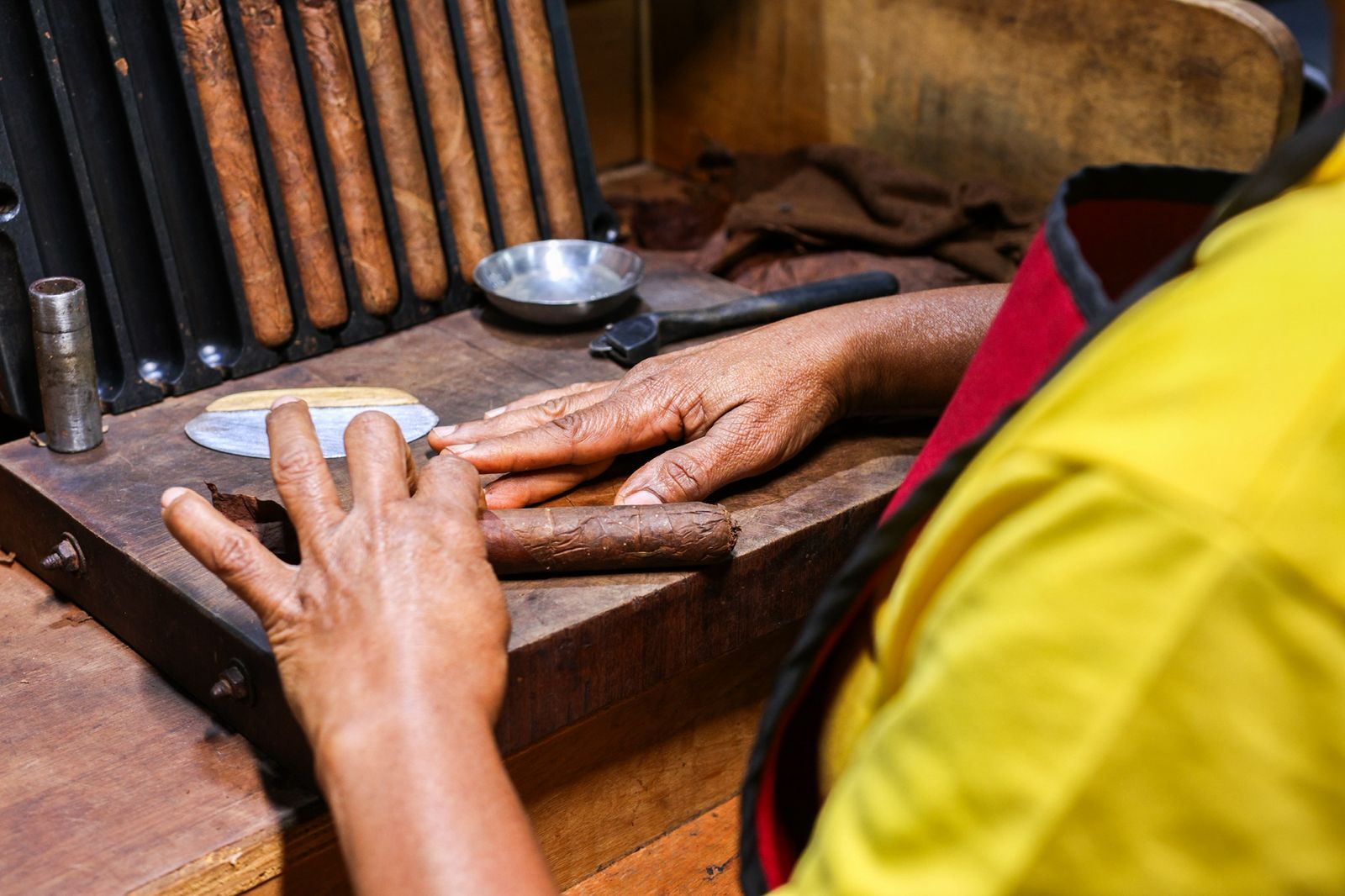
Secondary process: Prepares the blends of tobacco leaves, hand-rolls the cigars, places the bands and cellophane, manufactures the wooden boxes, and conducts quality control. Hand-rolled production is done today exactly as it was over 100 years ago, preserving the tradition of this artisanal craft. The manual skill of the cigar rollers is the most important characteristic of the process.
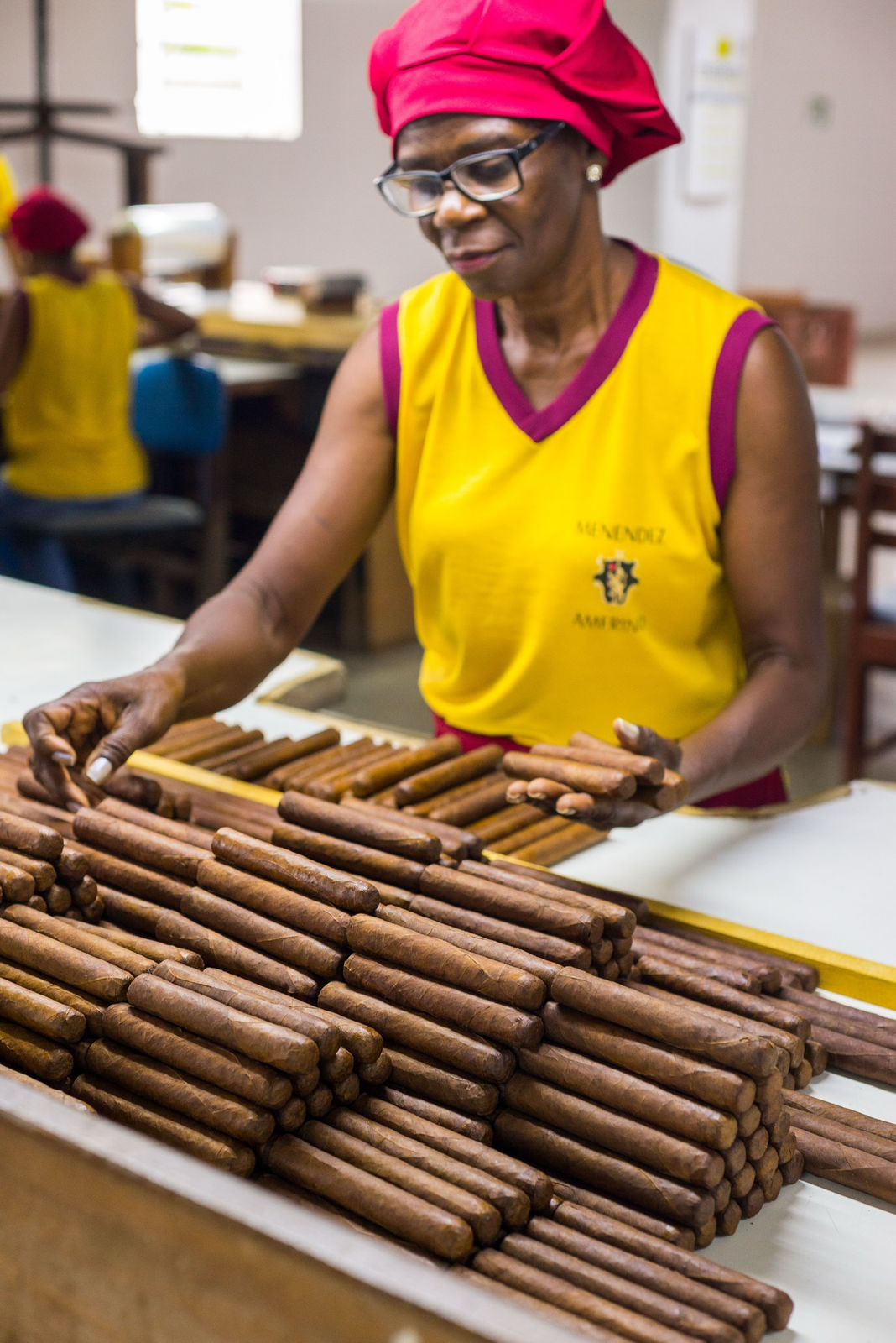
Color classification: Color classification is carried out by a professional dedicated to this function. He seeks to achieve the same shade of cigars within each box. Therefore, the classification of the tobacco leaves is fundamental, since only rigorous classification can guarantee success in this stage.
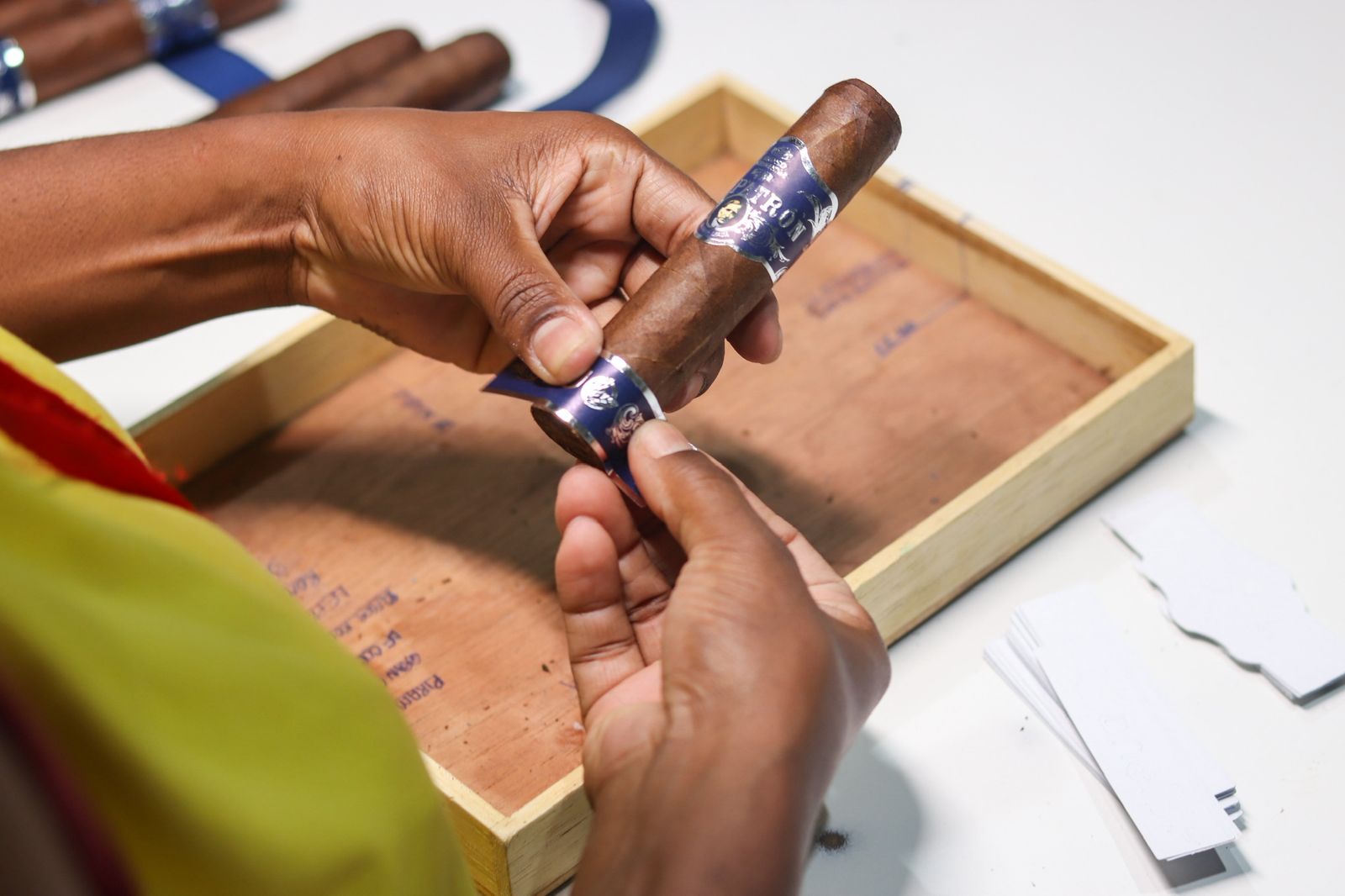
Finishing: The bands identify the cigar and ennoble the product, as they are generally made with art and refinement. The cellophane sleeve, besides protecting the wrapper, keeps the product in optimal condition for a maximum period of 60 days outside the humidor. This marks the beginning of packaging production. Each cigar is banded individually before receiving the cellophane protection. At this stage, every cigar is examined by the quality team.
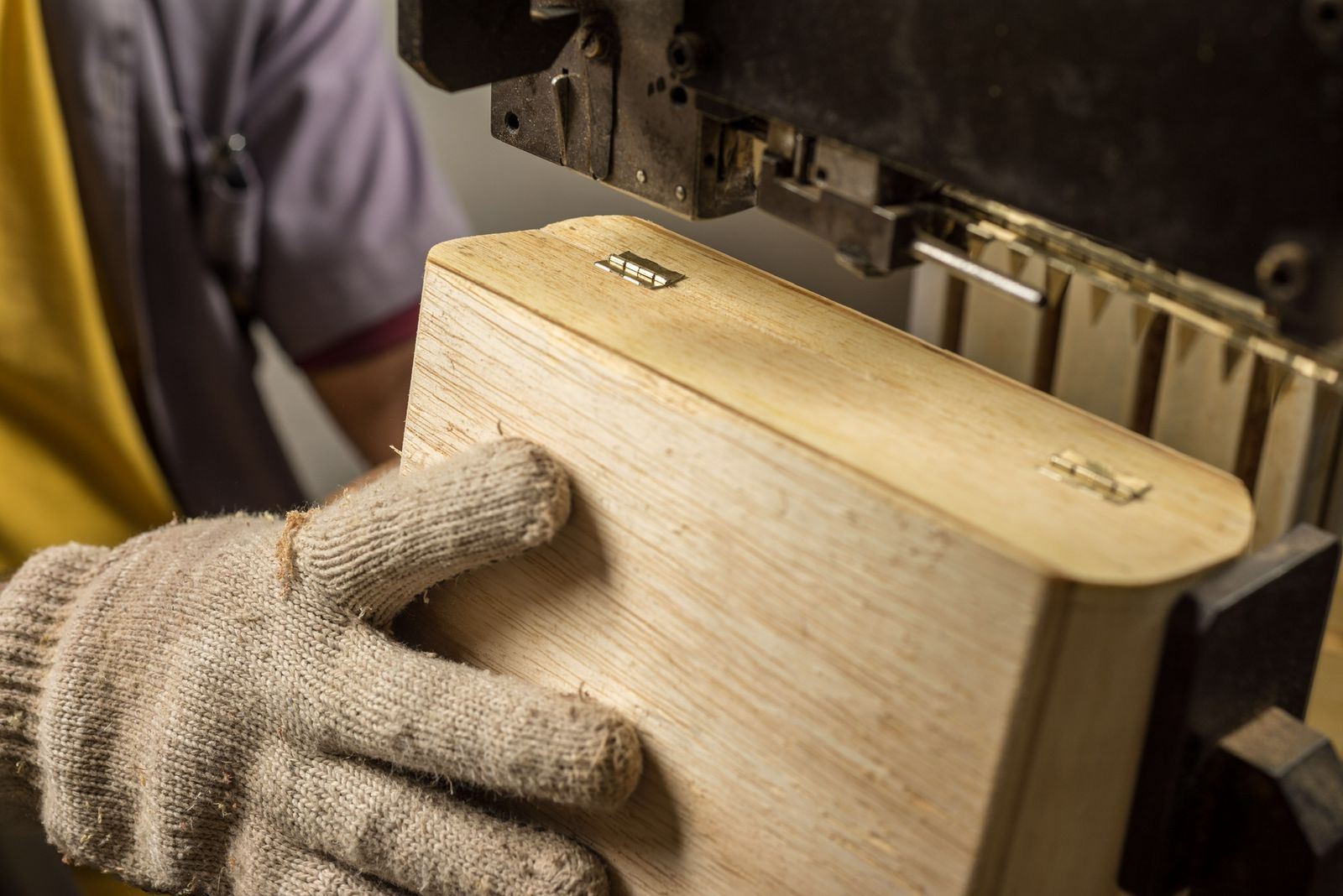
Making the boxes: All wooden packaging is made by hand, in our own factory. Because of this, we have a team of skilled carpenters to execute the most sophisticated box designs. In this sector, the main tasks are: cutting the wood, making the boxes, gluing decorative paper ribbons around the boxes, hot-iron stamping (pyrography engraving), laser printing, applying adhesives, and silkscreen.